





Learn about the types and causes of abnormal walking patterns in children.

In the past, abnormal walking in children was often ignored with comments like "it will go away on its own" or "all young children walk like that." In fact, however, an abnormal gait puts strain on the joints and causes leg pain, and if left untreated it can become an important cause of impaired growth. To help your child walk correctly, careful attention from parents is needed from an early age to build good habits and correct posture.
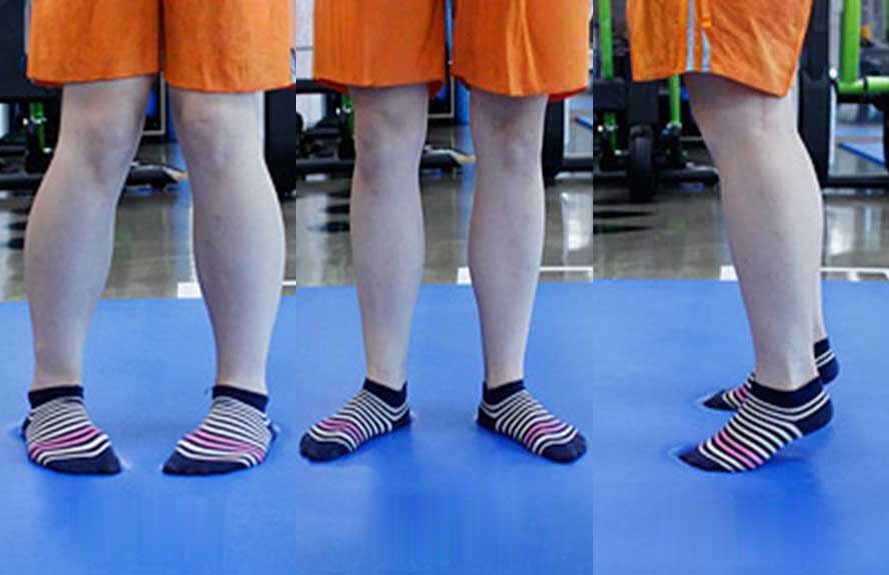
The child walks with the toes pointing slightly inward, so the legs look bowed. In-toeing up to age 2–3 is considered within the normal range, but if it continues past age 4 it may be a pathological flat foot caused by a neurological or muscular disorder, so it is best to see a pediatric orthopedic surgeon. Because the toes point inward, children who in-toe often trip over their own feet, so correction is recommended whenever possible.
If a child walks with the toes pointing outward, it is also best to have an accurate examination by an orthopedic specialist. It may simply be a habit, but it may also be caused by a problem in the legs. If it remains severe after age 6, various problems with body posture may follow, so parents should keep helping the child walk correctly in everyday life.
Unlike a normal gait, in which the heel touches the ground first and then the toes come down, the child walks only on the tips of the toes without the heel touching the ground. Many children walk on tiptoe until about age 2, partly due to habits such as using a baby walker. However, if toe walking continues after age 6, or the child always walks and runs on tiptoe, it may be due to cerebral palsy, so it is best to see an orthopedic specialist. Some children born with an Achilles tendon abnormality also walk on their toes.