










Dangol Hospital

Dangol Hospital
HOME 한국어
  • Conditions
  • Shoulder
  • Shoulder Impingement Syndrome
  • Conditions

    Learn about the symptoms, causes, self-check and treatment of shoulder impingement syndrome.

    Dangol Hospital logo

    M E A N I N G

    What Is Shoulder Impingement Syndrome?

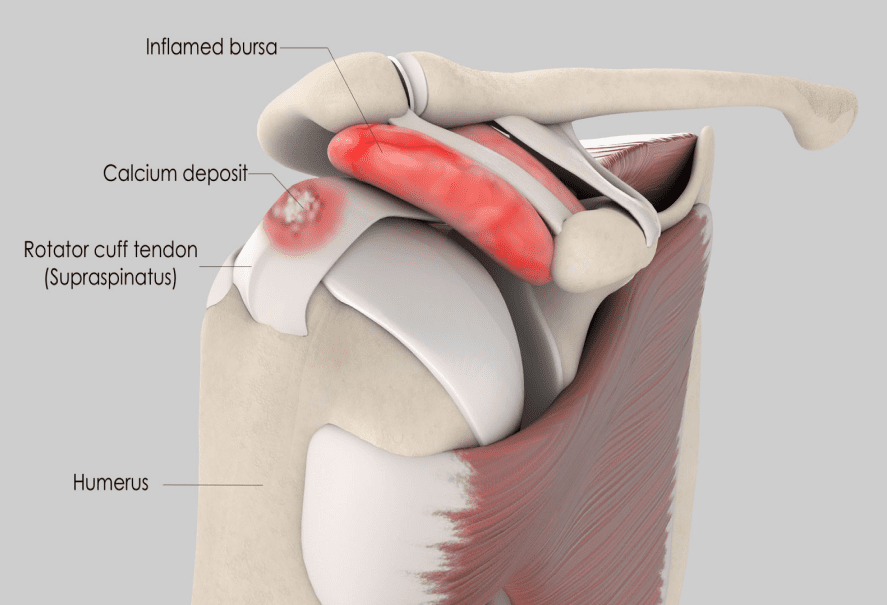
    A condition in which structures around the shoulder joint, such as the ligaments,
    the coracoid process and the supraspinatus tendon, rub against each other and become inflamed.

    For various reasons, the space between the acromion (part of the shoulder blade)
    and the rotator cuff narrows, so they collide with every movement and cause pain.
    The supraspinatus is the tendon used to raise the arm,
    so the pain tends to get worse when raising the arm overhead
    or in certain positions.
    It is common in people whose work involves raising the arms above the shoulders
    and in athletes such as baseball, volleyball and basketball players.

    Illustration of shoulder impingement with labeled anatomy

    SYMPTOMSymptoms of Shoulder Impingement Syndrome

    Woman with shoulder pain 01

    Severe pain when raising the arm or bending it backward

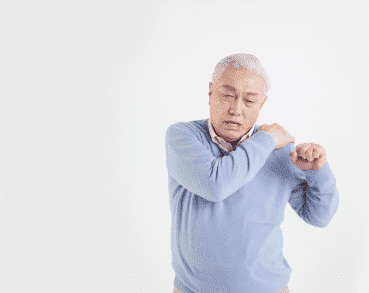
    Older man holding his shoulder 02

    Pain with a catching sensation at the front and outer side of the shoulder

    Woman unable to sleep 03

    Pain so severe that it prevents a good night's sleep

    Man lying in bed in pain 04

    Pain that gets worse when lying on the affected side

    CAUSECauses of Shoulder Impingement Syndrome

    People who use their shoulder muscles
    repetitively, and athletes

    Degenerative changes in the tendons due to aging

    Congenital bone deformities

    Sudden physical impact from accidents and similar events

    SELF-DIAGNOSISShoulder Impingement Syndrome Self-Check

    Pain occurs when I raise or move my arm to head or shoulder height.

    When I raise my arm, I feel something catching inside my shoulder.

    At night, it is uncomfortable to sleep lying on the painful shoulder.

    When I place one hand on the opposite shoulder, hold that elbow with my other hand
    and lift it straight up, the pain is so severe that I cannot lift the elbow.

    ※ If you feel pain in any of the four situations above, you may have shoulder impingement syndrome. If so, we recommend consulting a specialist for an accurate diagnosis and appropriate treatment.

    DIAGNOSIS

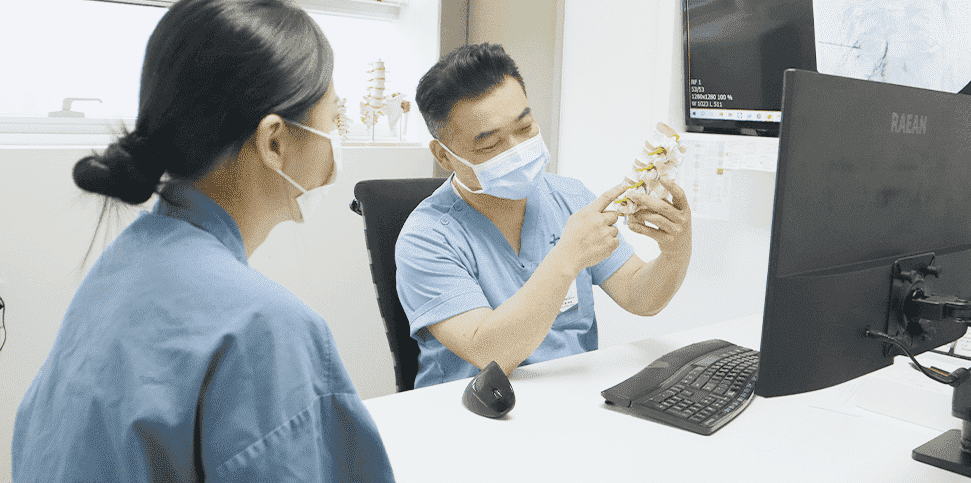
    Doctor explaining a diagnosis with a joint model

    DIAGNOSISDiagnosis at Dangol Hospital

    It often develops from sports that use the shoulder heavily or from repeating
    poor posture during exercise.
    Most cases are caused by sports injuries, but office workers who use computers a lot and homemakers who do a lot of housework also commonly suffer from it.
    It can be diagnosed with a simple X-ray, so if you notice symptoms, it is best to see a doctor.
    TREATMENT

    Treating Shoulder
    Impingement

    For shoulder impingement syndrome, non-surgical treatment is the first-line approach.
    This includes joint exercises, shoulder-strengthening exercises, physical therapy, injections and medication.
    Even after symptoms improve, repeated overhead arm movements and strenuous exercise
    should be avoided to prevent recurrence.
    If symptoms do not improve after 3–6 months or more of non-surgical treatment, surgery is performed.

    CORE OF TREATMENTKey to Treating Shoulder Impingement

    Except in cases of impaired mobility or paralysis, most patients can improve with non-surgical treatment.
    If symptoms do not improve or pain persists despite conservative treatment, surgery to find and resolve the underlying cause is needed.

    Step 1

    In most cases, 2–3 weeks of non-surgical treatment such as medication and physical therapy brings improvement. If not, treatment moves on to injection therapy and manual therapy.

    Step 2

    Surgery is the last resort. Before considering surgery, we provide customized procedures based on each patient's condition and circumstances.

    Step 3

    Surgery may be considered for patients whose pain persists despite sufficient treatment or who need emergency care. The surgical approach and expected outcome are decided in consultation with a specialist.

    Step by StepShoulder Impingement Treatment at a Glance

    Step 1: Conservative Treatment

    In most cases, 2–3 weeks of non-surgical treatment such as medication, physical therapy and pain injections brings improvement.
    If not, treatment moves on to injection therapy and manual therapy.

    Patient receiving medication [Medication]

    Anti-inflammatory painkillers and muscle relaxants relieve pain and make it easier to continue physical therapy.

    Injection into the shoulder [Injection Therapy]

    Steroid medication or trigger point injections (TPI) are injected into the areas of muscle causing pain to relax the contracted muscles. This treatment can be tried in the early stages.

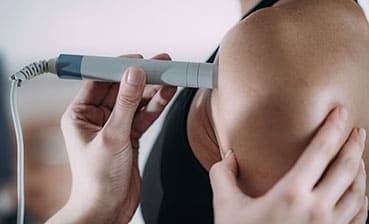
    Physical therapy on the shoulder [Physical Therapy]

    Uses heat, air, light, electricity, ultrasound and other methods to restore function around the painful area and support rehabilitation.

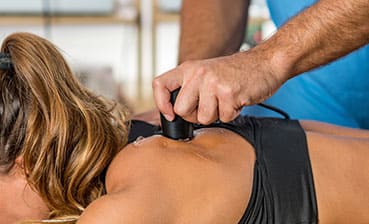
    Therapist performing manual therapy on the shoulder [Manual Therapy]

    A form of physical therapy performed by hand by a specially trained manual therapist, based on knowledge of human anatomy and physiology.

    Shockwave therapy on the shoulder [Shockwave Therapy (ESWT)]

    Extracorporeal shockwave therapy treats musculoskeletal pain from outside the body using a device that generates shockwaves.

    Step 2: Non-Surgical Procedures

    Surgery is the last resort. Before considering surgery,
    we provide customized procedures based on each patient's condition and circumstances.

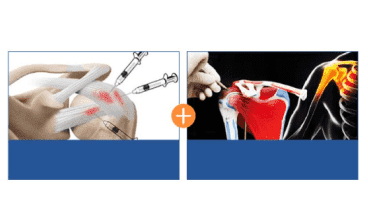
    FIMS therapy combines prolotherapy and functional intramuscular stimulation
    What Is FIMS Therapy?
    Prolotherapy
    (Proliferation Therapy)
    FIMS (Functional Intramuscular
    Stimulation)
    A non-surgical treatment combining both!
    [FIMS Therapy]

    A non-surgical treatment that combines prolotherapy (proliferation therapy) with FIMS (Functional Intramuscular Stimulation).

    Learn More

    Step 3: Surgical Treatment

    Surgery may be considered for patients whose pain persists despite sufficient treatment or who need emergency care.
    The surgical approach and expected outcome are decided in consultation with a specialist.

    Illustration of shoulder arthroscopy [Shoulder Arthroscopy]

    Through minimal incisions of less than 1 cm, an arthroscopic camera and surgical instruments are inserted into the joint to diagnose and treat the condition.

    Learn More
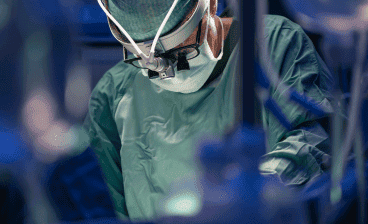
    Surgeon in the operating room [Acromioplasty]

    Using an arthroscope, the space between the acromion and the supraspinatus tendon is widened, the torn tendon is trimmed, and surrounding inflammation and bone spurs are removed to restore the original shape.

    Book Online
    Naver Booking
    KakaoTalk
    Chat
    Doctors & Hours
    Location
    Dangol
    SNS
    TOP