



Rarely, side effects such as local infection, minor bleeding or temporary nerve paralysis may occur after the procedure.



Learn about New PIMS therapy, a combination of prolotherapy and FIMS, who it is for and how it is performed.

About 30 min

About 0.5 cm

Sedation

Same day

Discharge after 2 days

After stitch removal

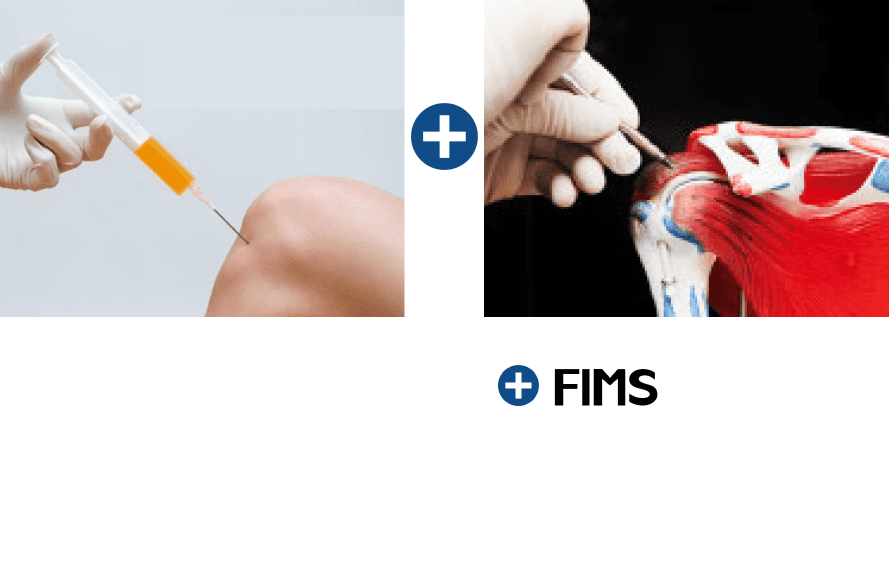
New PIMS therapy is a non-surgical treatment that combines prolotherapy (proliferation therapy)
and FIMS (Functional Intramuscular Stimulation).
By combining these two methods appropriately, it treats joint damage
while helping the joint move without pain.

Older adults, pregnant women, and patients with diabetes, high blood pressure or similar conditions
Working people with limited time, since you can go home on the day of the procedure
Shoulder pain located mainly on the outer or front side (around the deltoid muscle)
Pain that is worse in certain positions, such as raising the arm to the side, reaching out or rotating it backward
Shoulder pain that develops gradually until movement becomes limited in all directions
Difficulty washing or combing your hair, dressing and undressing, fastening a seat belt, taking a wallet out of a back pocket, or reaching out to use chopsticks or grab objects
Shoulder pain that is not constant but repeatedly improves and worsens while gradually getting worse
Suffering from pain at night
After anesthesia, preparations for treatment are made.
Damaged areas such as the joint capsule, ligaments and tendons are identified by ultrasound, and medication is injected into the damaged areas.
New PIMS therapy stimulates tense, shortened muscles that cause pain to induce relaxation.
A special needle stimulates the shortened muscles to relieve pain and restore movement to the stiffened joint.
To stimulate the exact area and prevent complications such as pneumothorax, the treatment is checked and performed in real time with a radiographic imaging device.
Muscle spasms and contractures around the shoulder are released, restoring the normal range of motion of the joint.
This is the treatment process for the shoulder joint. For other areas such as the spine or neck, please decide after consulting your doctor.

Pre-procedure X-ray
Post-procedure X-ray
Rarely, side effects such as local infection, minor bleeding or temporary nerve paralysis may occur after the procedure.
Tests beforehand and a professional consultation with the medical team are required for this procedure.


