





Dangol Hospital

Dangol Hospital
HOME 한국어
  • Conditions
  • Spine
  • Lumbar Disc Disease
  • Conditions

    Learn about the symptoms, causes, self-check and treatment of lumbar disc disease.

    Dangol Hospital logo

    M E A N I N G

    What Is Lumbar Disc Disease?

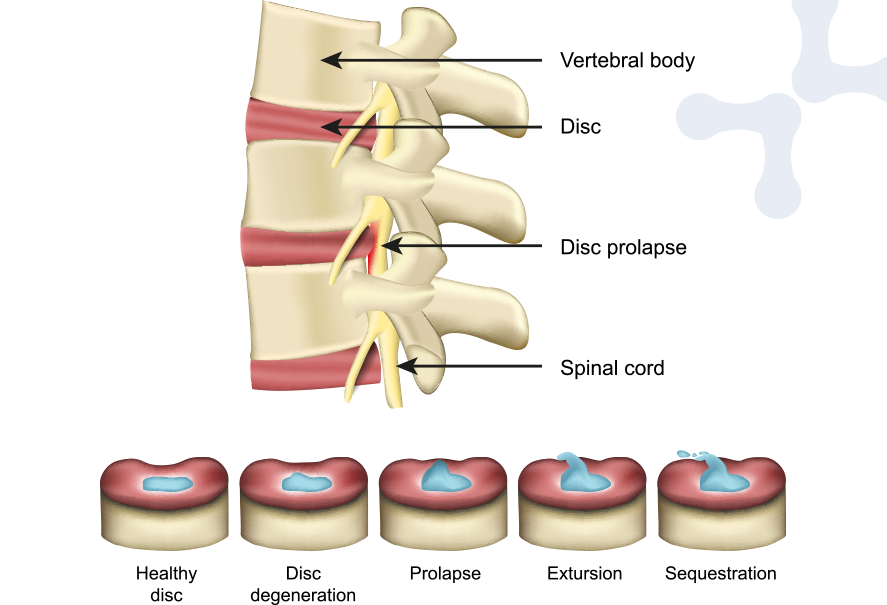
    Lumbar disc disease (lumbar disc herniation) occurs when a disc between two vertebrae is damaged and its jelly-like core (nucleus pulposus) pushes out, pressing on nearby spinal nerves and causing a range of neurological symptoms. A disc is a type of joint cartilage between the vertebrae. It absorbs shock and supports spinal movement, and is made up of a tough outer ring (annulus fibrosus) and an inner core (nucleus pulposus). When the outer ring tears or ruptures because of injury or degeneration, the core is pushed out and presses on surrounding tissue, especially the spinal nerves, causing pain and other symptoms. This is called a herniated disc.

    Illustration of a herniated lumbar disc and stages of disc degeneration

    SYMPTOMSymptoms of Lumbar Disc Disease

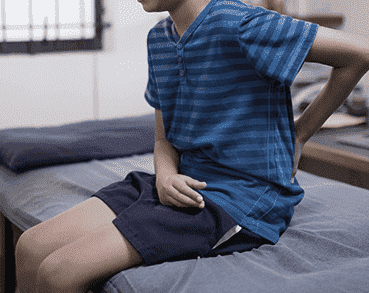
    Person holding the thighs in pain 01

    Pulling pain and numbness in the lower back, buttocks and thighs

    Person holding the lower leg 02

    Weakness throughout the legs, as if they were going numb

    Office worker holding the lower back 03

    Pain that may appear when you cough or sneeze

    CAUSECauses of Lumbar Disc Disease

    Degeneration of the spinal canal due to weakening of the spinal muscles and ligaments

    Sudden physical impact, such as from an accident

    Weakened muscles due to poor lifestyle habits

    Degenerative changes due to aging

    SELF-DIAGNOSISLumbar Disc Disease Self-Check

    My leg feels tight and painful, so it is hard to lift.

    Moving is so hard that I have trouble with bladder or bowel control.

    When I bend forward, the pain spreads down to my legs.

    My back pain goes away when I lie down.

    My buttocks ache intensely, and my legs hurt and feel numb.

    My lower back hurts when I cough or sneeze.

    DIAGNOSIS

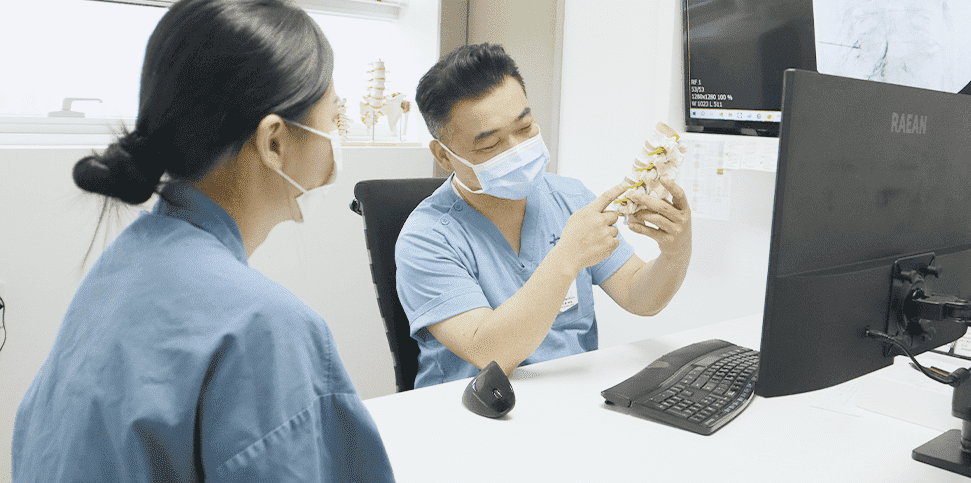
    Doctor explaining a diagnosis with a spine model

    DIAGNOSISDiagnosis at Dangol Hospital

    The condition is first suspected from the physical examination and plain X-rays. Because discs cannot be seen on plain X-rays, an MRI is performed to confirm the diagnosis. If needed, electromyography (EMG) and nerve conduction studies may also be performed to check for neurological abnormalities and identify exactly which nerve level is affected.
    TREATMENT

    Treating Lumbar
    Disc Disease

    About 70% of patients with a lumbar disc problem recover naturally with rest and stability. During this time, medication and physical therapy help reduce pain. If pain continues to interfere with daily life despite rest, medication and physical therapy, surgery may be considered.

    CORE OF TREATMENTKey to Treating Lumbar Disc Disease

    Except for patients who have difficulty moving or show signs of paralysis, most patients can improve with non-surgical treatment.
    If conservative treatment does not help or the pain persists, surgery that addresses the underlying cause is needed.

    Step 1

    In most cases, 2–3 weeks of non-surgical treatment such as medication and physical therapy brings improvement. If not, treatment moves on to injection therapy and manual therapy.

    Step 2

    Surgery is the last resort. Before considering surgery, we provide customized procedures based on each patient's condition and circumstances.

    Step 3

    Surgery may be considered for patients whose pain persists despite adequate treatment or who arrive in an emergency condition; the surgical approach and expected outcome are decided in consultation with a specialist.

    Step by StepLumbar Disc Disease Treatment at a Glance

    Step 1: Conservative Treatment

    In most cases, 2–3 weeks of non-surgical treatment such as medication, physical therapy and pain injections brings improvement.
    If not, treatment moves on to injection therapy and manual therapy.

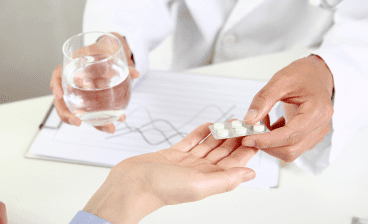
    Patient receiving medication [Medication]

    Anti-inflammatory painkillers and muscle relaxants relieve pain and make it easier to continue physical therapy.

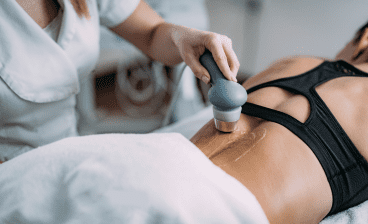
    Ultrasound therapy on the lower back [Physical Therapy]

    Uses heat, air, light, electricity, ultrasound and other methods to restore function around the painful area and support rehabilitation.

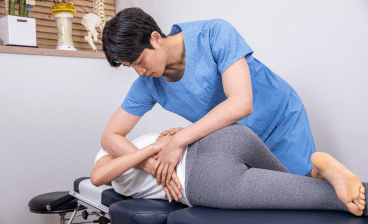
    Therapist performing manual therapy [Manual Therapy]

    A form of physical therapy performed by hand by a specially trained manual therapist, based on knowledge of human anatomy and physiology.

    Step 2: Non-Surgical Procedures

    Surgery is the last resort. Before considering surgery,
    we provide customized procedures based on each patient's condition and circumstances.

    Doctor preparing an injection [Nerve Block]

    Medication is delivered directly to the problem disc, nerve, muscle or joint to reduce swelling, inflammation and adhesions and improve blood flow, treating the cause of the pain.

    Learn More
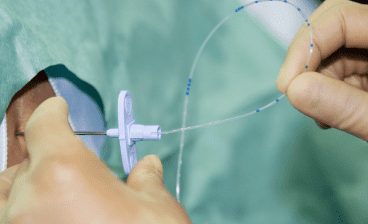
    Catheter used for neuroplasty [Neuroplasty]

    A very thin catheter is inserted near the tailbone, and medication is injected around the nerve causing the pain to relieve it.

    Learn More

    Step 3: Surgical Treatment

    Surgery may be considered for patients whose pain persists despite adequate treatment or who arrive in an emergency condition;
    the surgical approach and expected outcome are decided in consultation with a specialist.

    Surgeon in the operating room [Microscopic Discectomy]

    Surgery that removes the protruding disc through a skin incision of about 2 cm to relieve pressure on the nerve.

    Book Online
    Naver Booking
    KakaoTalk
    Chat
    Doctors & Hours
    Location
    Dangol
    SNS
    TOP