

Learn about the causes, self-check and treatment of degenerative kyphosis.

Seen from the side, a normal spine forms an S shape with curves to the front and back. In this condition, however, the lumbar spine stands stiff and straight with no curve, which is why it is also called "flat back." Because it speeds up degenerative changes, if left untreated it can lead to a lumbar herniated disc and various other spinal conditions.
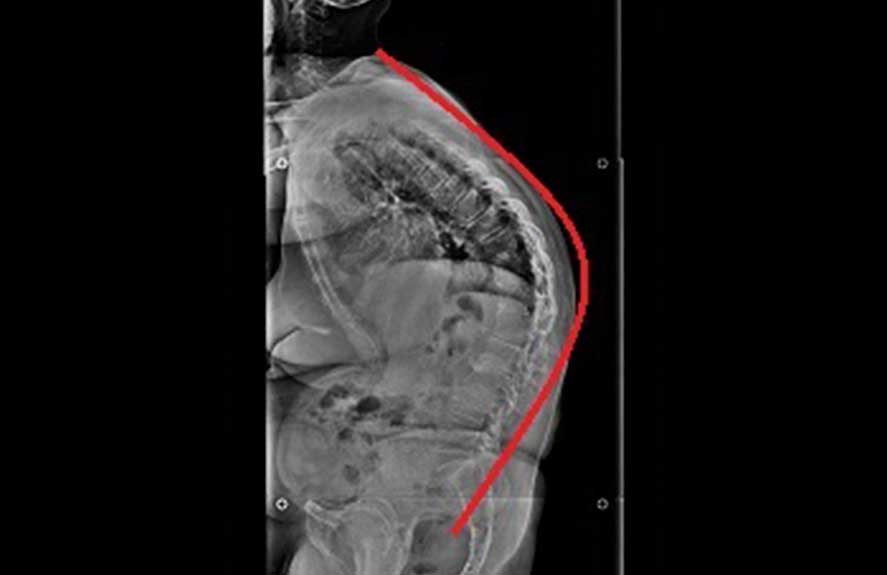

Degeneration of the spinal canal due to weakening of the spinal muscles and ligaments

Sudden physical impact, such as from an accident
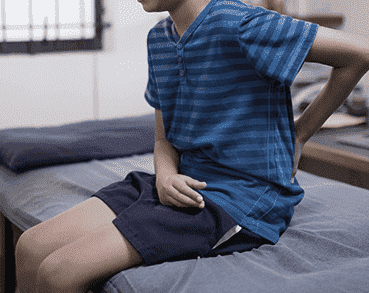
Weakened muscles due to poor lifestyle habits

Degenerative changes due to aging

Standing straight in front of a mirror, one shoulder looks higher.
My belt line tilts to one side.
Standing straight, the gap between each arm and my body is different on the left and right.
The heels of my shoes wear down unevenly.
My head is always tilted in photos.
Measured lying flat, my left and right arms and legs are different lengths.
For women: the breasts look different in size.
When I bend forward with my knees straight, one side of my back and waist sticks up.
TREATMENT
Spinal deformities such as kyphosis, in which changes in the curve of the spine cause pain, are treated mainly with exercise therapy that keeps the muscles of the whole body balanced and relieves pain. Treatment of kyphosis focuses on strengthening the erector spinae muscles, but it is important to strengthen the muscles at the front, back and sides of the spine evenly.
Except for patients who have difficulty moving or show signs of paralysis, most patients can improve with non-surgical treatment.
If conservative treatment does not help or the pain persists, surgery that addresses the underlying cause is needed.
 Step 1
In most cases, 2–3 weeks of non-surgical treatment such as medication and physical therapy brings improvement. If not, treatment moves on to injection therapy and manual therapy.
 Step 2
Surgery is the last resort. Before considering surgery, we provide customized procedures based on each patient's condition and circumstances.
 Step 3
Surgery may be considered for patients whose pain persists despite adequate treatment or who arrive in an emergency condition; the surgical approach and expected outcome are decided in consultation with a specialist.
In most cases, 2–3 weeks of non-surgical treatment such as medication, physical therapy and pain injections brings improvement.
If not, treatment moves on to injection therapy and manual therapy.
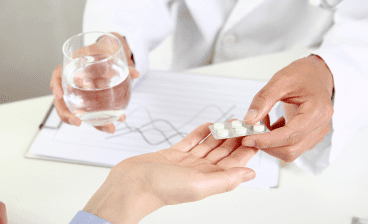 [Medication]
Anti-inflammatory painkillers and muscle relaxants relieve pain and make it easier to continue physical therapy.
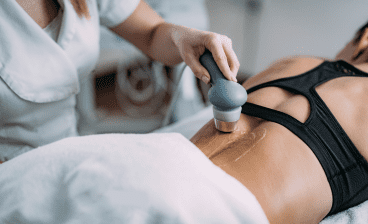 [Physical Therapy]
Uses heat, air, light, electricity, ultrasound and other methods to restore function around the painful area and support rehabilitation.
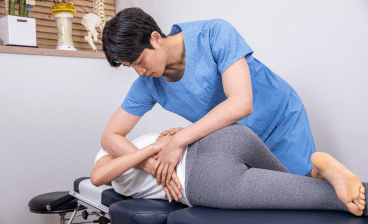 [Manual Therapy]
A form of physical therapy performed by hand by a specially trained manual therapist, based on knowledge of human anatomy and physiology.
Surgery is the last resort. Before considering surgery,
we provide customized procedures based on each patient's condition and circumstances.
 [Nerve Block]
Medication is delivered directly to the problem disc, nerve, muscle or joint to reduce swelling, inflammation and adhesions and improve blood flow, treating the cause of the pain.
Learn More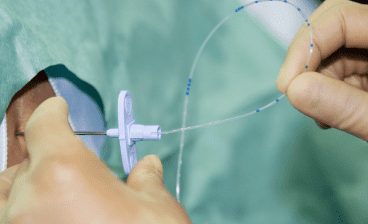 [Neuroplasty]
A very thin catheter is inserted near the tailbone, and medication is injected around the nerve causing the pain to relieve it.
Learn MoreSurgery may be considered for patients whose pain persists despite adequate treatment or who arrive in an emergency condition;
the surgical approach and expected outcome are decided in consultation with a specialist.
 [Microscopic Discectomy]
Surgery that removes the protruding disc through a skin incision of about 2 cm to relieve pressure on the nerve.