



We perform a physical examination, a neurological examination and X-rays. If a disc problem is suspected, a CT or MRI scan is taken to identify the exact site of damage and confirm the diagnosis.





Learn about the symptoms, causes, diagnosis and treatment of cervical disc herniation.

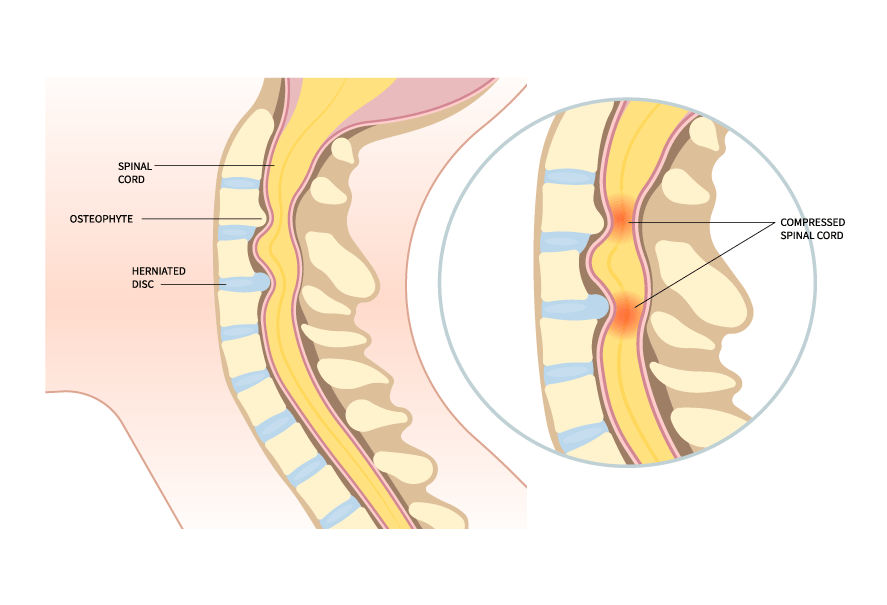
A cervical (neck) disc herniation is a condition in which the inner core (nucleus pulposus) of a disc between the cervical vertebrae pushes out and presses on a nerve root or the spinal cord. The main cause is age-related degeneration: the cervical discs lose water, become less elastic and stiffen, cracks form in the disc wall, and the hardened core pushes out. It can also be caused by injury.
 01
Pain that starts in the neck and spreads to the shoulders, arms and hands
 02
Weakness and pain in the shoulders and arms
 03
In severe cases, the spinal cord can be damaged and the legs may become paralyzed

Most often caused by degenerative changes

Can develop from poor posture or holding one position repeatedly for long periods

Injury or sudden movements can also be a cause

Overuse of computers and smartphones and long hours of desk work are also considered causes
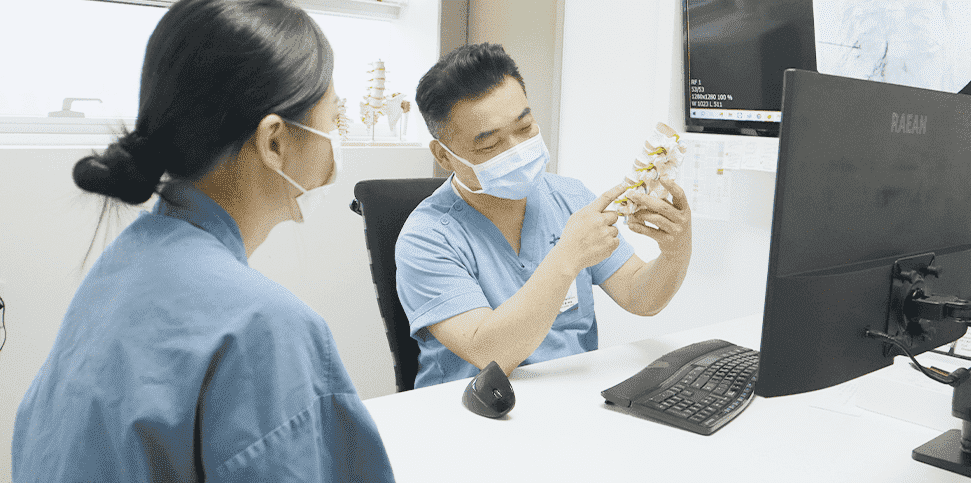
We perform a physical examination, a neurological examination and X-rays. If a disc problem is suspected, a CT or MRI scan is taken to identify the exact site of damage and confirm the diagnosis.
Most cervical disc problems, especially hard discs, can improve with medication and physical therapy for 2–3 weeks, or up to 3–6 months. Patients should keep the neck in whatever position is comfortable; arm numbness tends to ease when the neck is bent forward.
 [Medication]
Treatment with medications such as anti-inflammatory painkillers that relieve pain and reduce inflammation.
 [Physical Therapy]
Uses heat, air, light, electricity, ultrasound and other methods to promote tissue healing and improve movement, restoring function around the painful area and supporting rehabilitation.
If conservative treatment does not help, customized non-surgical treatment such as nerve blocks and neuroplasty is provided before surgery is considered, taking into account the patient’s condition and situation.
 [Nerve Block]
Medication is delivered directly to the problem disc, nerve, muscle or joint to reduce swelling, inflammation and adhesions and improve blood flow, treating the cause of the pain.
Learn More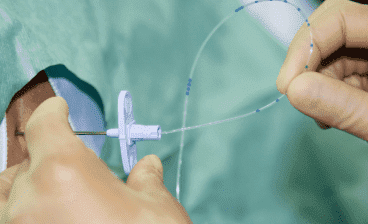 [Neuroplasty]
A very thin catheter is inserted, and medication is injected around the nerve causing the pain to relieve it.
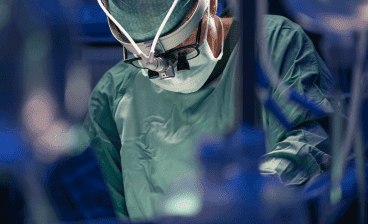
Learn MoreSurgery should be considered when radiating pain keeps returning despite conservative treatment, when pain running down the arm is unbearable, or when there are signs of nerve paralysis such as muscle weakness. Cervical disc surgery is a relatively simple operation that takes about an hour.
 [ Anterior Approach ]
The disc is removed while the narrowed nerve canal and disc space are widened again, with the advantage that the cervical curve can be corrected to a C shape.
[ Posterior Approach ]
Removing only the disc from the back relieves symptoms, but the cervical curve is not corrected, and narrowing of the disc space and kyphotic deformity may develop.


