




Treatment is done through small openings without a large incision, so there is less damage to normal tissue.




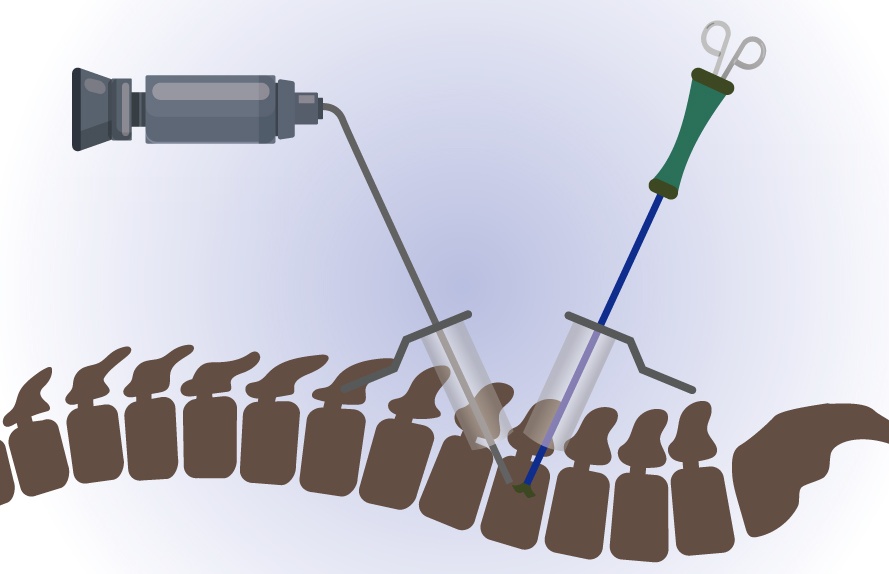
Biportal endoscopic spine surgery treats spinal conditions through two small openings without a large incision.

1 hour

2cm

Spinal orgeneral anesthesia

The next day

Discharge after 5 days

Day after stitch removal

It treats spinal conditions such as herniated discs and spinal stenosis through minimal incisions,
improving on conventional spine treatment without damaging healthy tissue.
Without a large incision, the surgeon views the problem directly through two small openings
and treats the affected area.

Patients who are candidates for any spine surgery, including for stenosis or disc herniation
Patients with spinal stenosis
Older patients or those for whom surgery is difficult because of chronic illness
Patients with a moderate to severe herniated disc
Revision surgery needed because of spinal instability after disc surgery
Patients who need a fast recovery
X-ray, CT, MRI and blood tests are used to rule out tumors and other conditions.
The degree of disc herniation and spinal canal narrowing is checked and assessed accurately.
After a minimal 5 mm incision in the lower back, an endoscope is inserted to identify the exact cause, and the tissue causing the pain is removed.

Before Surgery
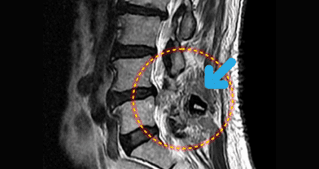
After Surgery
Treatment is done through small openings without a large incision, so there is less damage to normal tissue.
The surgeon treats the problem while viewing it directly through the endoscope.
The time you need to wear a brace after surgery can be shortened.
You can return to daily life quickly.
The incision needs to be disinfected until the stitches are removed.
After discharge, bend or twist your lower back only gently and do not overdo it.
For a while, sit on a chair rather than cross-legged on the floor.
The procedure requires special equipment and a highly skilled, experienced surgeon.
Right after surgery you can walk to the bathroom, and you are usually discharged after about 5 days. The wound needs care after surgery, and you may feel some stiffness from the implant.
Limit movement as much as possible and wear a brace when you move.
Leg raises lying down, stretching and short exercise sessions are possible, and light walking or office work is fine.
Start spinal
stabilization exercises.
Start spinal strengthening and flexibility exercises; light work is possible.


