


Learn about the symptoms, causes, self-check and treatment of TFCC injuries of the wrist.

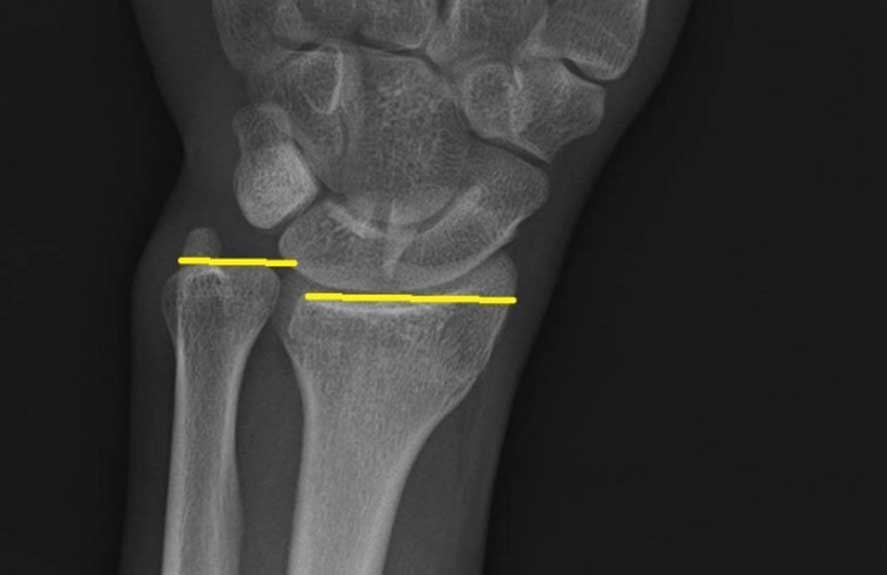
The TFCC (triangular fibrocartilage complex) stabilizes the wrist when it rotates inward and outward and cushions the wrist joint, playing an important role in keeping the wrist stable and bearing pressure. A tear of this triangular fibrocartilage caused by injury, repeated micro-damage or degenerative change is called a triangular fibrocartilage complex tear (TFCC injury).
 01
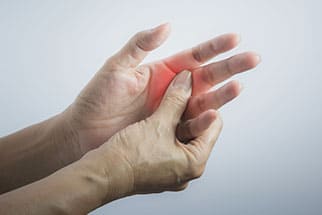
Pain with a clicking sound when using the wrist
 02
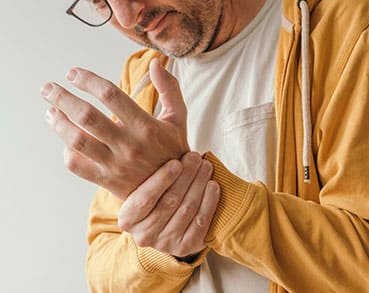
Pain and a sore, aching feeling on the little-finger side of the wrist
 03
Pain makes hand and wrist movements feel awkward
 04
Pain so severe that it disturbs sleep at night
Sudden physical impact from accidents and similar events

Degenerative changes in the wrist ligaments due to aging

Repetitive work or excessive use of the wrist

Use of electronic devices such as computers and smartphones

I feel pain and soreness on the little-finger side of my wrist.
When I use my wrist, the pain gets worse and it makes a sound.
The pain gets worse when I bend or rotate my wrist.
Limited joint movement makes daily life difficult.
TREATMENT
Mild symptoms can improve with sufficient rest and medication such as anti-inflammatory drugs. However, if the pain is severe enough to limit everyday tasks such as turning the wrist or opening lids, surgery is performed.
In most cases, 2–3 weeks of non-surgical treatment such as medication, physical therapy and pain injections brings improvement.
If not, treatment moves on to injection therapy and manual therapy.
 [Medication]
Anti-inflammatory painkillers and muscle relaxants relieve pain and make it easier to continue physical therapy.
 [Injection Therapy]
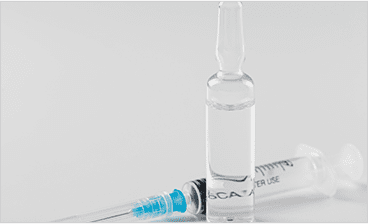
Steroids or trigger point injections (TPI) are injected into the area causing muscle pain to relax contracted muscles. This treatment can be tried in the early stage.
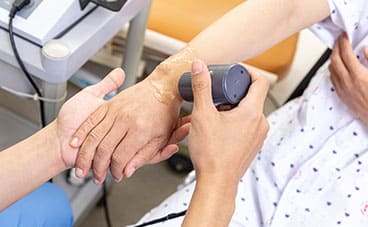 [Physical Therapy]
Uses heat, air, light, electricity, ultrasound and other methods
to restore function around the painful area
and support rehabilitation.