




No bone tissue is used for fixation, so there are no complications related to bone grafting.



Dynamic spinal stabilization restores and supports the spine without cutting or grafting bone.

2 hours

3~4cm

Spinal orgeneral anesthesia

After 24 hours

Discharge after 5 days

Day after stitch removal

Dynamic spinal stabilization is a type of spinal fixation that, without cutting or
grafting bone, removes the ligament between the spinous processes and the ligamentum flavum,
then uses an artificial ligament and a locking device to restore the spine's original height
and make it strong.
Conventional spinal fixation reduces flexibility at the fixed disc level
and can cause degenerative changes in neighboring segments. Dynamic stabilization
addresses this: it allows partial movement and keeps the spine balanced,
spreading the load on the disc.
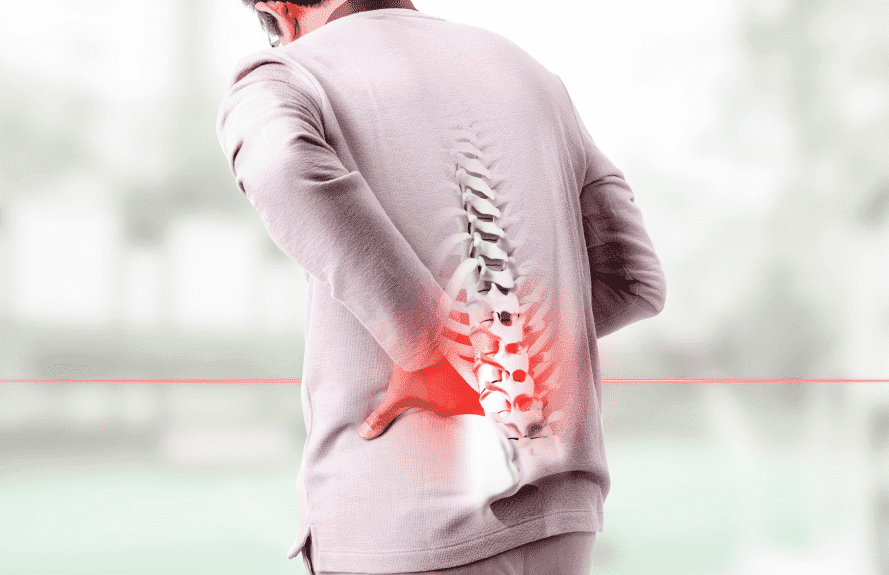

Severe, breaking-like lower back pain and a feeling that the hips are giving way when standing up from sitting
Severe lower back pain from spondylolysis
Severe spondylolisthesis with progressing stenosis
Back and leg pain so severe after a short walk that moving around is difficult
Severe disc degeneration causing progressive deformity of the vertebrae
Under general anesthesia, a skin incision of about 3 cm is made, and only the damaged ligamentum flavum that compresses the nerves and no longer works normally is removed.
The damaged ligament pressing on the nerve is removed through the natural space between the spinous processes, touching the bone as little as possible.●Because the natural space between the spinous processes is used, no bone is cut.●Without cutting bone, there is no concern about bleeding or weakened heart and lung function during surgery.
An ergonomically designed locking device (locker) is inserted between the spinous processes to restore the collapsed spine to its original height, and the locker and spinous processes are then firmly secured with an artificial ligament.
- As safe as microscopic spine surgery, with little bleeding, there is no need for transfusion, and most patients can walk from the next day.
- It widens the nerve openings more than standard decompression and reduces pressure on the facet joints.

Before Surgery
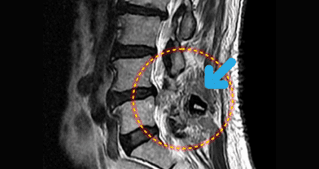
After Surgery
No bone tissue is used for fixation, so there are no complications related to bone grafting.
Partial movement of the lower back is preserved after surgery, which helps reduce the load on neighboring levels.
The time you need to wear a brace after surgery can be shortened.
You can return to daily life quickly.
The incision needs to be disinfected until the stitches are removed.
After discharge, bend or twist your lower back only gently and do not overdo it.
For a while, sit on a chair rather than cross-legged on the floor.
The procedure requires special equipment and a highly skilled, experienced surgeon.
Right after surgery you can walk to the bathroom, and you are usually discharged after about 5 days. The wound needs care after surgery, and you may feel some stiffness from the implant.
Limit movement as much as possible and wear a brace when you move.
Leg raises lying down, stretching and short exercise sessions are possible, and light walking or office work is fine.
Start spinal
stabilization exercises.
Start spinal strengthening and flexibility exercises; light work is possible.


