



















Dangol Hospital

Dangol Hospital
HOME 한국어
  • Conditions
  • Hand
  • Carpal Tunnel Syndrome
  • Conditions

    Learn about the symptoms, causes, self-check and treatment of carpal tunnel syndrome.

    Dangol Hospital logo

    M E A N I N G

    What Is Carpal Tunnel Syndrome?

    The carpal tunnel is a small passage surrounded by the bones and ligaments of the wrist. Tendons and blood vessels pass through this tunnel on their way to the fingers. When the tunnel narrows or the pressure inside it rises for various reasons and compresses the median nerve, the condition is called carpal tunnel syndrome. The palm and fingers become numb and sensation changes, so you may drop things you are holding. If left untreated for a long time, sensory and motor function can be lost, so early treatment is very important.

    Illustration of the median nerve in the wrist

    SYMPTOMSymptoms of Carpal Tunnel Syndrome

    Person holding a painful wrist at a laptop 01

    Tingling or throbbing pain in the wrist

    Person holding the wrist 02

    Numbness in the palm and in all fingers except the little finger

    Driver with wrist pain 03

    Pain makes hand and wrist movements feel awkward

    Person rubbing a painful hand 04

    Pain so severe that it disturbs sleep at night

    CAUSECauses of Carpal Tunnel Syndrome

    Degenerative changes in the wrist ligaments due to aging

    Repetitive and excessive use of the wrist

    Use of electronic devices such as computers and smartphones

    Compression of the median nerve due to a wrist fracture or dislocation

    Complications of infections and inflammatory diseases

    SELF-DIAGNOSISCarpal Tunnel Syndrome Self-Check

    Tinel's test on the wrist

    Tinel's Test: Make a fist, then press the protruding wrist tendons with the other hand to check for pain or numbness.

    Phalen's test with the backs of the hands together

    Phalen's Test: Point the fingers of both hands downward and press the backs of the hands together. Hold this position for 60 seconds and check for numbness.

    ※ If you feel pain or abnormal sensations, carpal tunnel syndrome is very likely. If these symptoms appear, we recommend consulting a specialist at a nearby hospital for an accurate diagnosis.

    DIAGNOSIS

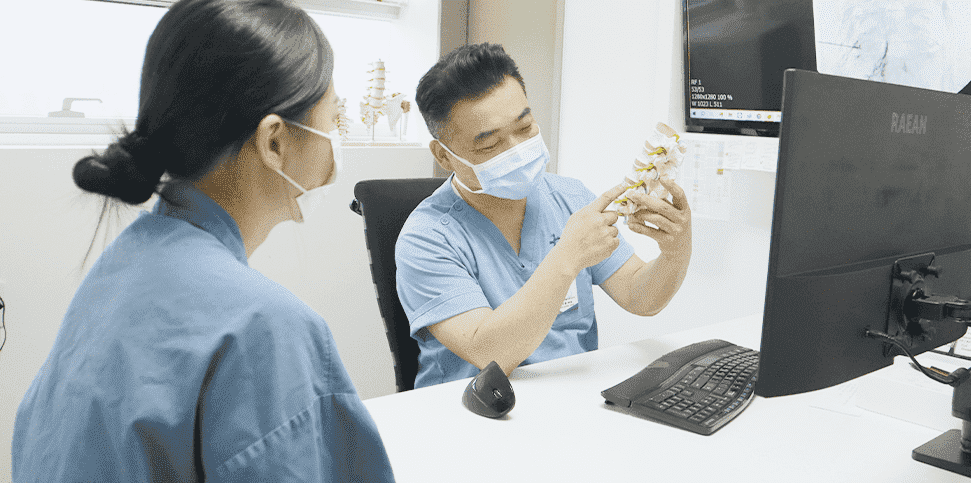
    Doctor explaining a diagnosis with a joint model

    DIAGNOSISDiagnosis at Dangol Hospital

    Carpal tunnel syndrome is usually diagnosed by examining the affected hand and wrist. To confirm that the problem is carpal tunnel syndrome, especially when surgery is being considered, the doctor may perform a nerve conduction study or advanced imaging such as magnetic resonance imaging (MRI) or ultrasound.

    TREATMENT

    Treating Carpal
    Tunnel Syndrome

    Mild symptoms can improve with sufficient rest and medication such as anti-inflammatory drugs.

    However, if numbness and pain are severe enough to limit everyday tasks such as using chopsticks or opening lids, surgery is performed.

    Step by StepCarpal Tunnel Syndrome Treatment at a Glance

    Non-Surgical Treatment

    Mild symptoms can improve with sufficient rest and medication such as anti-inflammatory drugs.

    Patient receiving medication [Medication]

    Treatment with medications such as anti-inflammatory painkillers that relieve pain and reduce inflammation.

    Physical therapy on the wrist [Physical Therapy]

    Uses heat, air, light, electricity, ultrasound and other methods to promote tissue healing and improve movement, supporting functional recovery and rehabilitation of the painful area.

    Shockwave therapy on the forearm [Shockwave Therapy (ESWT)]

    Extracorporeal shockwave therapy treats musculoskeletal pain from outside the body using a device that generates shockwaves. The strong waves help form new blood vessels and stimulate surrounding tissue and bone, making it effective for pain.

    Surgical Treatment

    If numbness and pain are severe enough to limit everyday tasks such as using chopsticks or opening lids, surgery is performed.

    Surgeon in the operating room [Wrist Arthroscopy]

    Through a minimal incision of less than 1 cm, an endoscopic camera and surgical instruments are inserted into the joint to diagnose and treat the condition. The surgeon views the affected area directly and cuts the transverse carpal ligament that compresses the median nerve, relieving pressure on the nerve.

    Surgeon in the operating room [Carpal Tunnel Release]

    Through a minimal incision of less than 2–3 cm, the transverse carpal ligament that compresses the median nerve is cut. The operation takes about 10 minutes, and everyday activities that involve moving the fingers are possible after surgery. Stitches are removed within 2–3 weeks.

    Book Online
    Naver Booking
    KakaoTalk
    Chat
    Doctors & Hours
    Location
    Dangol
    SNS
    TOP