

Learn about epidural adhesiolysis (INDIGO), who it is for, how it is performed and aftercare.

About 30 min

Under 1 cm

Sedation

Next day

Discharge after 2 days

After stitch removal

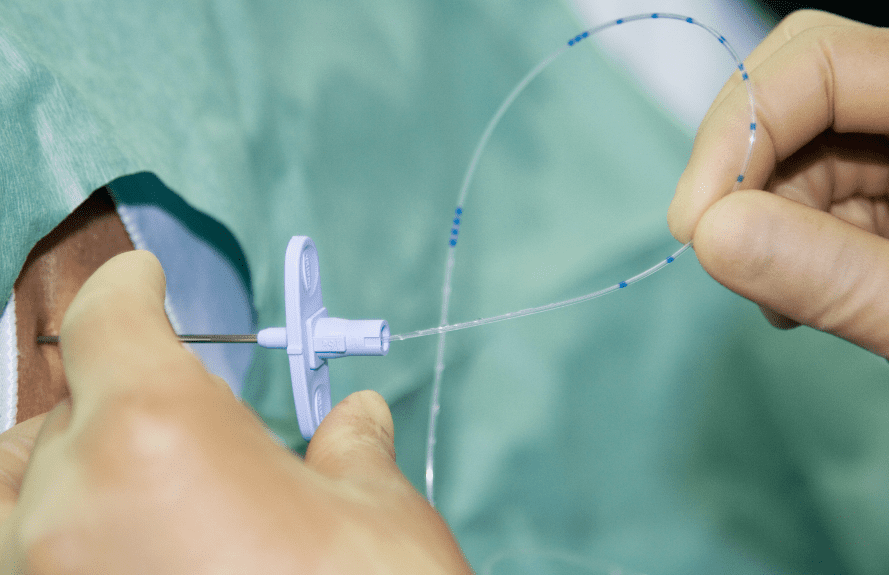
A special catheter (a very thin tube under 1 mm) is inserted through the opening between the vertebrae
to remove unnecessary tissue that has grown around the lumbar and cervical spine,
or to inject medication that relieves inflammation and frees nerves trapped by adhesions.
It is a procedure approved by the US FDA.
Because it treats back and neck conditions without a skin incision,
it can be performed safely even in patients with chronic illness and older adults.

Patients with low back pain and leg pain that respond poorly to oral medication or physical therapy
Patients with spinal conditions for whom surgery is difficult due to the risks of general anesthesia or advanced age
Patients whose MRI findings do not call for surgery but whose symptoms persist
Patients with chronic low back pain and neuropathic pain
Patients with sciatica who have not had surgery
Patients who have not improved after several epidural injections
Patients whose pain persists after spine surgery
After local anesthesia, a needle is inserted through the passage at the sacrum (tailbone) that leads into the spinal canal.
A special remotely steerable catheter is inserted.
The catheter is used to release the nerve adhesions and swelling that cause pain.
Medication is injected to wash out the adhesion tissue and reduce nerve swelling.
Medication is injected to prevent the adhesions from forming again.
After the procedure, the adhesions and swelling are removed and the nerve tissue becomes stable.
If you develop an unbearable, severe headache or abnormal sensations in your legs or feet after the procedure, visit the hospital.
Avoid bathing, saunas and hot packs on the day of the procedure.
A small amount of clear discharge may appear for 1–2 days after the procedure. Change the bandage covering the procedure site as often as needed.
Lying leg raises, stretching and short-distance exercise are possible, and you may also take light walks or do office work.
Week 2: Start light stretching.
Week 3: Short-distance driving is possible.
Week 4: Full lower back stretching is possible.
Week 5: Exercise using spinal fitness equipment.
Week 6: Physical labor is possible.