













Dangol Hospital

Dangol Hospital
HOME 한국어
  • Conditions
  • Foot
  • Hallux Valgus (Bunion)
  • Conditions

    Learn about the symptoms, causes, diagnosis and treatment of hallux valgus (bunion).

    Dangol Hospital logo

    M E A N I N G

    What Is Hallux Valgus?

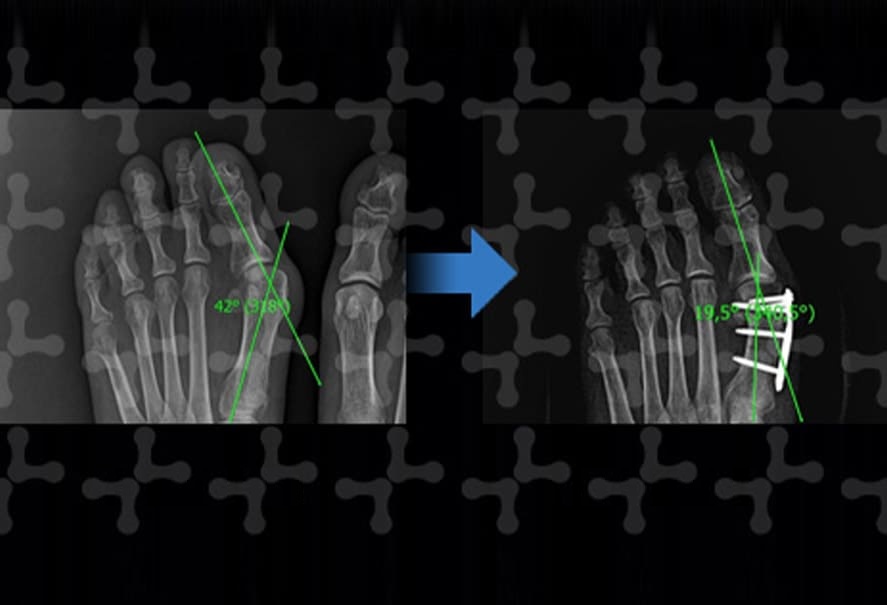
    Hallux valgus (bunion) is a condition in which the big toe bends outward and the joint sticks out like a lump. It is often hereditary, but it also develops when high heels with a narrow toe box or tight-fitting shoes shift the body's center of gravity forward and put pressure on the toes. The protruding joint is irritated by the shoe, becomes thickened and inflamed, and causes pain. If left untreated, the toe bends more and more and can lead to walking problems or arthritis of the toe joint, so early treatment is needed.

    X-rays of hallux valgus before and after treatment
    Before Treatment
    After Treatment

    SYMPTOMSymptoms of Hallux Valgus

    Holding a painful foot 01

    Throbbing pain at the protruding part of the big toe

    Woman resting after a run 02

    Blisters or calluses where the joint rubs against the shoe

    Illustration of pain in the back and leg while running 03

    Knee and lower back pain when walking

    Doctor explaining a foot model 04

    The bent big toe causes deformity of the other toes

    Woman in high heels holding her foot 05

    Feet tire after walking for a long time, and wearing dress shoes is difficult

    CAUSECauses of Hallux Valgus

    Examining a foot

    Hereditary factors such as flat feet

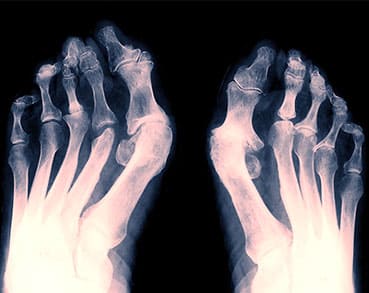
    X-ray of feet with toe deformity

    Congenital toe deformity

    Woman putting on high heels

    Poor habits such as wearing high heels or narrow shoes

    DIAGNOSIS

    Doctor consulting with a patient

    DIAGNOSISDiagnosis at Dangol Hospital

    Hallux valgus is diagnosed by visual inspection and palpation (toe shape, calluses, etc.). X-rays are needed to decide on the treatment plan.

    They are used to measure the angles between the bones, joint deformity and inflammation, and range of motion.

    TREATMENT

    Treatment of
    Hallux Valgus

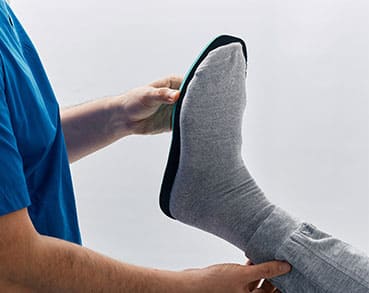
    Treatment depends on the patient's symptoms, the severity of the deformity, and the goal of treatment (controlling inflammation and pain, or also correcting the appearance). If hallux valgus is mild, wide and soft shoes, corrective insoles or orthotic devices are used to control symptoms and slow the progression of the deformity. If the deformity is severe, it must be corrected with surgery. During surgery, the protruding bone is shaved down and the length of the ligaments and soft tissues is adjusted.

    Step by StepHallux Valgus at a Glance

    Non-Surgical Treatment

    If symptoms are mild, get plenty of rest and wear comfortable shoes so the protruding area is not irritated. Anti-inflammatory medication is effective for relieving inflammation.

    Taking medication [Medication]

    Treatment with medications such as anti-inflammatory pain relievers to ease pain and reduce inflammation.

    Surgical Treatment

    Surgery is performed when the deformity is severe or pain makes it difficult to wear shoes.

    Surgeon in the operating room [Bunion Correction Surgery]

    Surgery that shaves down the protruding bone, cuts the misaligned bone to correct the angle, and lengthens the muscles and soft tissues.

    Book Online
    Naver Booking
    KakaoTalk
    Chat
    Doctors & Hours
    Location
    Dangol
    SNS
    TOP